
Unlimited Support vs Hourly: Which Pricing Model Is Cheaper?
Every business owner trying to scale a company knows that a website is like a tireless salesperson, working around the clock to capture leads and complete transactions. It must function perfectly every single day to bring in new revenue. Yet, keeping a modern website running requires constant attention, security checks, and design adjustments. When a simple contact form stops sending messages, potential clients walk away. When a software update breaks your page layout, your reputation suffers.
As a business leader, spending your hours wrestling with code or fixing broken links is a poor use of time. Your focus belongs on growing your business and managing operations. This technical stress forces you to face a major financial and operational decision. Do you hire a web developer by the hour? Or do you sign up for a flat-rate monthly care plan?
The hourly option often appears cheaper at first. It tempts business owners to think they can save money by paying only when a bug appears. However, comparing unlimited support vs hourly pricing models reveals a different reality. To make the best financial decision for your business, you must examine how both systems operate behind the scenes.
The True Cost of Hourly Billing
Hourly billing seems straightforward. You pay an hourly rate to a developer only when you request their help. This fee typically ranges from $50 to $150 per hour for an independent freelancer. Established development agencies frequently charge even more for their time. These numbers align with data from the Forbes Advisor Website Cost Guide.
If your website only requires two hours of minor adjustments in a month, your expenses remain low. But websites do not break on a predictable schedule. A sudden update conflict can take your entire site offline. A simple search to find the bug can easily consume five hours of diagnostic labor. A quiet month quickly turns into an unexpected five-hundred-dollar emergency invoice.
Hourly billing also introduces friction into your daily operations. The developer’s clock starts running the moment they open your email or pick up your call. You receive bills for simple email updates, quick questions, and basic planning sessions. This financial setup causes business owners to hesitate before making small changes. You might avoid adding a new team image, updating product descriptions, or posting fresh content because you know it will trigger a new invoice.
This hesitation leads to a stale, outdated website. A website that does not change fails to convert visitors into buyers. Over time, trying to save money on hourly updates hurts your growth and damages your search engine rankings.
Hourly developers have no financial incentive to perform preventative maintenance. They do not log in daily to check your site speed, verify backups, or optimize your database tables. Instead, they wait for you to notice a problem and contact them. By the time you notice a broken page, you have already lost visitors and revenue. You then pay premium emergency rates to repair a disaster that routine maintenance could have easily avoided.
The Predictability of Flat-Rate Support
Now consider the alternative: a flat-rate monthly support plan. This model functions like preventative care for your digital platform. Instead of waiting for a crash to occur, a support team performs regular maintenance tasks behind the scenes. Routine tasks like uptime monitoring and database optimization prevent major failures before they disrupt your customers.
Under a flat-rate plan, your website expenses become a fixed, predictable operating cost. This model matches the service provider’s goals with your own business goals. Because you pay a set fee every month, the provider makes the most profit when your website runs perfectly. If your site crashes, they must spend hours fixing it at their own expense.
To avoid this extra labor, flat-rate providers work hard to prevent issues. They perform daily updates, monitor security threats, and test your forms regularly. This setup protects your budget from sudden spikes and gives you peace of mind.
This model also allows you to improve your website without financial stress. If you want to adjust product descriptions, change contact information, or test a new plugin, you simply send an email. The WPBeginner WordPress Maintenance Guide explains that bundling these tasks into a flat monthly rate saves substantial money compared to pay-as-you-go editing. You can keep your website fresh and modern without calculating the cost of every minor edit.
Comparing the Two Models
To help you evaluate these options, this table compares how hourly billing and flat-rate support plans operate:
| Pricing Factor | Hourly Billing Model | Flat-Rate Support Plan |
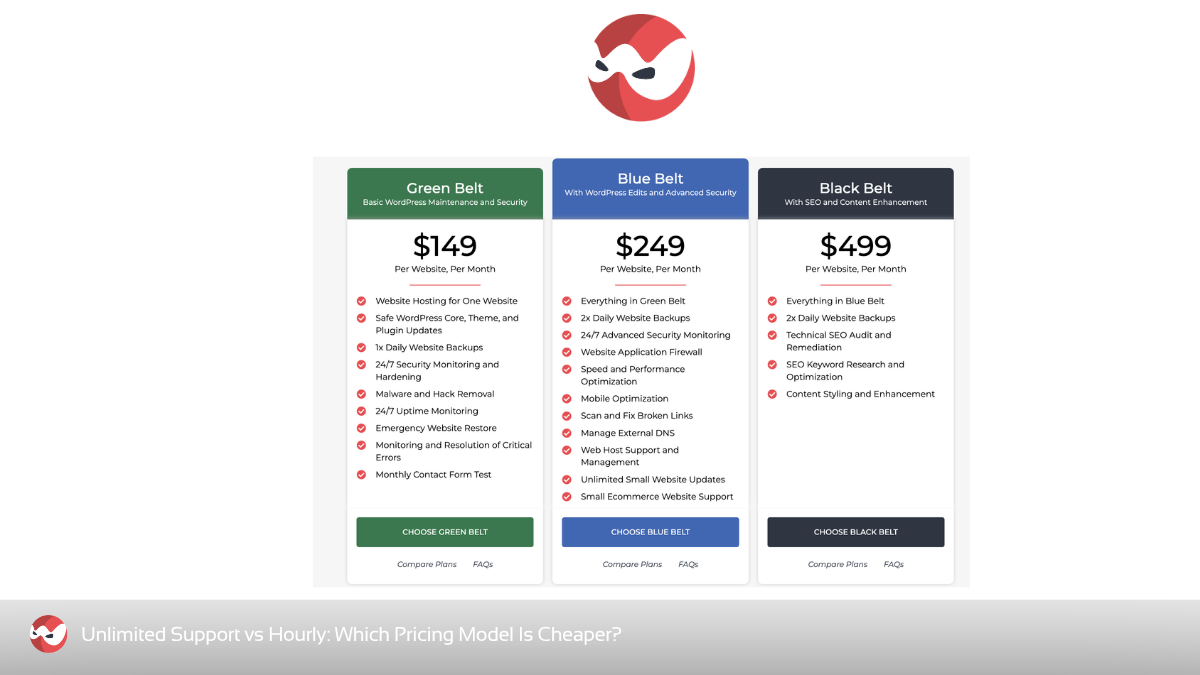
| Average Cost | $50 to $150 per hour | $149 to $499 per month |
| Cost Predictability | Highly variable; spikes
during technical emergencies |
Fixed and predictable monthly expense |
| Provider Incentive | Earns more money when technical problems occur | Earns more profit when the website runs perfectly |
| Communication Cost | Billed for emails,
phone calls, and planning |
Included in the monthly service contract |
| Maintenance Focus | Reactive; fixes are applied after a crash occurs | Proactive; daily scans, updates, and optimization |
| Website Edits | Charged per change or per hour of labor | Support and minor edits included in the package |
A Practical Solution for Growing Businesses
If you want to remove the technical burden of website management, look at the structured plans offered by Smart Web Ninja. They offer specialized WordPress Maintenance Services that handle the daily tasks required to keep your website safe, fast, and stable.
With their care plans, your core system, themes, and plugins receive safe weekly updates. Before making any changes, the team performs a complete backup of your site. They then verify that everything works correctly after the updates are complete. They also perform daily security monitoring and uptime checks, so you never have to worry about your site going down without your knowledge.
For companies that need regular content changes, their WordPress Website Management Plans provide a smart way to manage your budget. Plans like their Blue Belt package include unlimited small updates, edits, and adjustments. This means you can request text edits, image swaps, and plugin adjustments whenever you need them. You do not have to worry about a ticking clock or a surprise bill.
Whether you run a local business in Chicago, Illinois, a law firm in Denver, Colorado, or an e-commerce store anywhere in the United States, keeping your website secure is essential. Choosing a flat-rate plan removes the guesswork from your technology budget. It ensures that professional developers keep your site fast, secure, and ready for your clients, leaving you free to focus entirely on scaling your brand.